

Expert guide to a successful stay in the Southern Alps
The mountains in March are as intriguing as they are appealing.
The days are getting longer.
The light is becoming brighter.
The terraces are full from morning to night.
The slopes are still open at high altitude.
For many, March feels like a milder version of winter.
But this is an illusion.
The end of the season is technically different. It requires more anticipation, a more careful reading of conditions, and a better-controlled pace. In the Southern Alps, this period can offer one of the most rewarding experiences of winter, provided you avoid certain mistakes.
Here are the five most common mistakes made in the mountains in March, with practical, expert advice on how to plan a coherent, safe, and thoroughly successful trip.
1. Thinking that March snow works the same as in the middle of winter

This is the most common mistake.
March is not February with more sunshine. The snowpack changes under the effect of marked thermal cycles.
Understanding nighttime refreezing
At high altitudes, nights remain cold. When the temperature drops below zero, the surface layer freezes and hardens. At dawn, the slopes can be very firm, sometimes technical.
Consequences:
- Excellent grip if the equipment is well prepared
- A more pronounced sensation of speed
- Precise edge sharpening is required
Poorly maintained skis immediately become a disadvantage. March does not forgive technical approximation.
Anticipate the spring transformation
With the high levels of sunshine in the Southern Alps, the snow transforms quickly. By late morning, it becomes softer. In the afternoon, depending on the exposure, it can become heavier and more physically demanding.
This means:
- Faster muscle fatigue
- Less stable footing
- Careful management of your schedule
The best strategy is to ski early, choose the right slope (north in the morning, avoid south-facing slopes too late in the day) and accept that you will ski for less time.
March rewards smart organization, not blind endurance.
2. Booking without checking the altitude and closing dates
Not all resorts in the Southern Alps experience the end of the season in the same way.
The maximum altitude of the ski area is a determining factor. Below 1,600 meters, conditions can vary from year to year. Above 2,000 meters, conditions are generally more stable until the end of March.
Before booking a mountain vacation in March, it is essential to check:
- The altitude of the highest point in the area
- The actual percentage of slopes open
- The official closing dates
- The dominant exposure of the slopes
Some resorts close for economic reasons despite adequate snow cover. Others keep higher altitude areas open longer.
A successful trip starts with a careful review of these parameters. This analysis is an integral part of an expert approach to mountain tourism.
3. Letting your guard down when it comes to safety
More sunshine and fewer people around can give you a false sense of security.
In reality, March is a tricky time of year.
Freeze/thaw cycles alter the cohesion of the snowpack. South-facing slopes change rapidly throughout the day. Heavy snow avalanches can occur when temperatures rise.
Check the daily avalanche report remains essential, even at the end of the season.
For any off-piste outing:
- Early start
- Precise analysis of the route
- Carefully planned itinerary
- Full equipment
- Use of a local guide if necessary
The mountains are brighter in March. But they are no less demanding.
4. Underestimating the impact of the sun at high altitude

In March, the sun is higher than in the middle of winter. Reflection off the snow amplifies UV exposure.
The wind masks the sensation of heat. Dehydration happens faster than you think.
Common mistakes:
- Neglecting sunscreen
- Forgetting to drink regularly
- Underestimating eye protection
A trip to the mountains in March requires:
- SPF 50 sunscreen
- High-protection sunglasses or goggles
- Continuous hydration
- Adaptable technical clothing
Mornings can be cold. Afternoons are significantly warmer. Layering becomes strategic.
5. Maintain a high season pace
March changes the atmosphere.
Fewer crowds outside of school holidays.
More space on the slopes.
A calmer atmosphere.
Trying to replicate the intense pace of February is a mistake.
The end of the season calls for a different approach:
- Focused skiing in the morning
- A break in the sun at the end of the morning
- Gentle activity in the afternoon
- A relaxed evening
Mountain professionals know that March is ideal for working on technical precision rather than accumulation.
Fewer runs.
More quality.
More controlled sensations.
It's a time of transition: the light changes, the snow evolves, and our bodies demand more attention than performance. Adapting your pace is therefore not a minor detail: it's the key to transforming a simple vacation into a truly memorable experience.
And that's precisely where preparation comes into its own.
Why March is particularly suited to an adult vacation in the Southern Alps
The end of the season transforms the relationship with the mountains.
Less tension.
More availability.
A more enveloping light.
For adult guests, this period is ideal. It allows them to combine physical activity, relaxation, and exploring the region.
This is precisely the philosophy behind Les Lodges de Valière.
Les Lodges de la Valière: recovery, comfort, and consistency at the end of the season
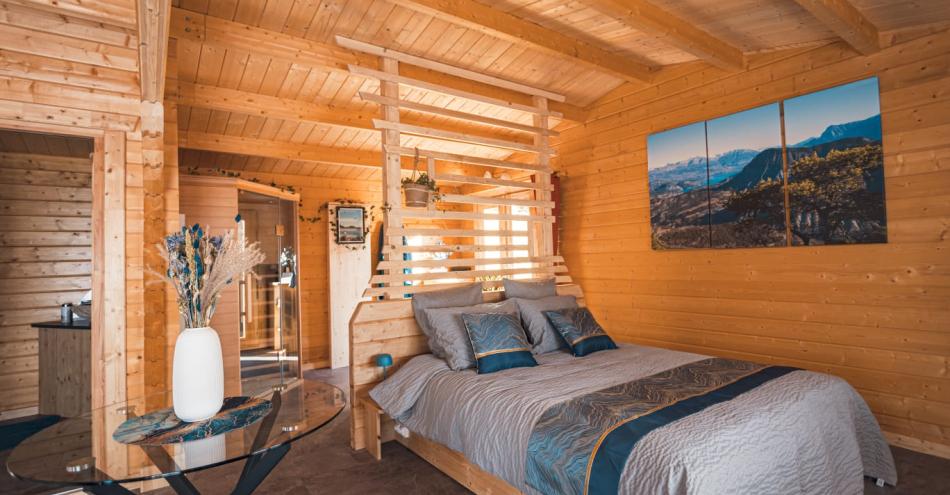
In March, recovery becomes strategic.
The morning frost calls for technical precision. The transformed snow in the afternoon tires the legs even more.
At Les Lodges de la Valière, the experience has been designed to accompany this specific rhythm.
Jacuzzi, sauna, and cold bath: optimize recovery
Alternating hot and cold is known to promote muscle recovery.
The sauna:
- Relaxes muscles
- Improves circulation
- Promotes overall relaxation
The cold bath:
- Stimulates circulation
- Limits micro-inflammation
- Relieves the feeling of heavy legs
The jacuzzi offers enveloping relaxation with views of the Southern Alps.
In the late afternoon, as the light fades, the warm water and peaceful surroundings transform recovery into a true sensory experience.
This is not just comfort.
It is in harmony with the season.
A cozy atmosphere perfect for the end of winter
The Lodges welcome almost exclusively adults.
In March, this tranquility takes on its full meaning.
Bright spaces.
Warm materials.
Respectful silence.
After a morning of technical skiing on the slopes, returning to a peaceful environment allows you to slow down naturally.
Read. Chat. Watch the light on the peaks.
The mountains are not just about exertion.
Cuisine designed for balance
Breakfast is designed to support an early start at altitude:
- Fresh produce
- Balanced energy intake
- Appropriate hydration
The appetizer platters showcase local products from the Hautes-Alpes.
The meals are refined without being heavy, suited to an active stay.
In March, we don't seek excess.

Slow tourism in the Southern Alps: beyond skiing
March is the ideal time to adopt a slow tourism approach.
The longer days allow you to diversify your experience.
Tour of Lake Serre-Ponçon
Nearby, Lake Serre-Ponçon offers a breathtaking spectacle.
At the end of winter, its waters take on turquoise blue hues. The still snow-capped peaks are reflected in the surface.
Touring the lake by car with scenic stops, on foot along certain trails, or by bike allows you to discover another side of the Southern Alps.
You go from the verticality of the slopes to the soothing horizontality of the landscape.
This respite is the perfect complement to a morning of skiing.
Consciously slowing down
Slow tourism consists of:
- Reducing unnecessary travel
- Promoting local stakeholders
- Prioritizing quality over quantity
Staying in accommodation that is rooted in the local area and close to activities limits environmental impact and enhances the experience.
March is the ideal season to live in the mountains rather than just consume them.
Why choose the Southern Alps in March
The Southern Alps offer structural advantages:
- High sunshine levels
- High-altitude ski areas
- Relatively stable climate
- More moderate visitor numbers
This combination creates a rare balance between sporting activity, recovery, and contemplation.
In conclusion
The mountains in March are not just the approximate end of winter.
It is a demanding and subtle transitional season.
Avoiding classic mistakes, such as misreading the snow, choosing the wrong resort, letting your guard down, or pushing yourself too hard, will make this period a rewarding experience.
In the Southern Alps, when activity, recovery, gastronomy, and regional roots are aligned, your stay takes on a different dimension.
Less demonstrative.
More controlled.
More coherent.
And sometimes, true luxury in the mountains is not about doing more.
It's about living each day exactly as it should be lived.
If you are looking for a high-end nature getaway in the Southern Alps, our lodges welcome you for a break designed to help you let go.